


Dominik Rzepka of Symrise AG on team spirit, change, and the future of internal communication
For Dominik Rzepka, the transition from marketing and PR to global internal communications at Symrise AG felt like switching sides: from the “freestyle” to the “compulsory” aspects of communication. At least, that’s how he felt at the time. Now, ten years later, we spoke with him about what still fascinates him about internal communication, how he has continued to develop it, and which skills will be crucial in the future—and we also learned how to secure a place for one’s work in a museum during one’s lifetime.
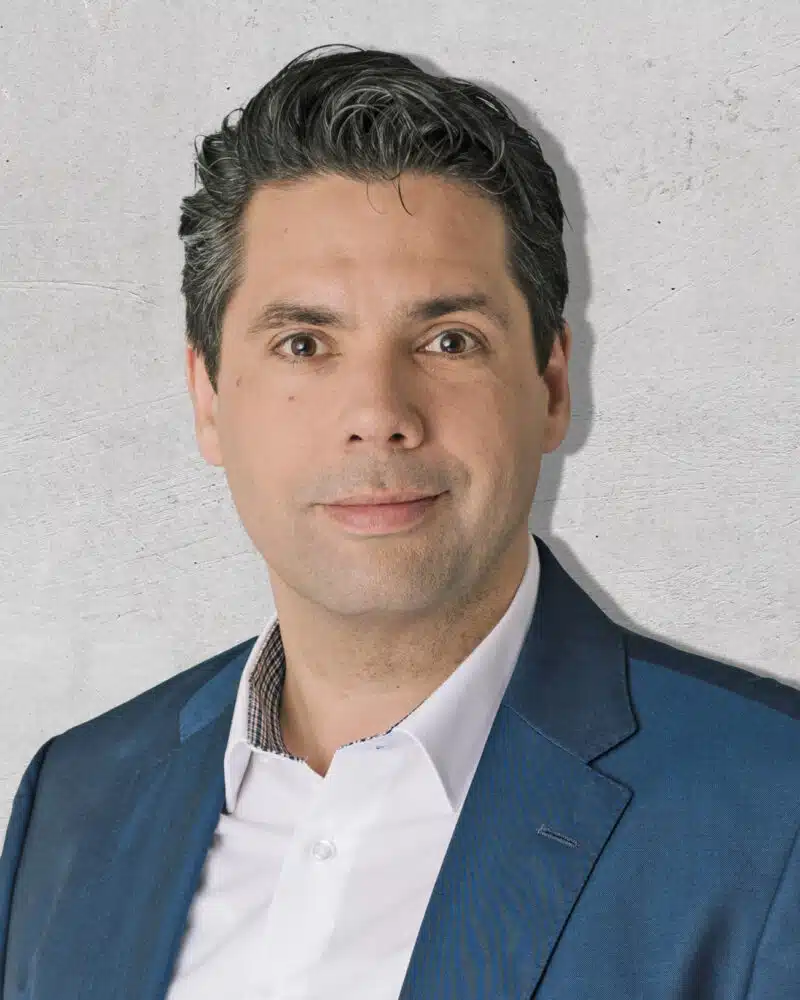
Dominik, you celebrated your ten-year anniversary at Symrise this past February. After all these years, what still fascinates you about global communications?
In addition to the technical innovations and the trend-driven development landscape surrounding taste, scent, and nutrition, I am particularly fascinated by the people behind it all. In internal communications, I have the privilege of working closely with a wide variety of professional groups. And not just with those who work directly on our products. Departments such as HR, IT, and Finance also contribute to Symrise’s innovative strength on a daily basis. It’s this diversity that still fascinates me to this day.
How would you describe your role in one sentence?
It’s interesting that I’m talking about this with Leinhäuser of all people, because I really do see myself as a kind of translator within the company.
The strategic role of internal communication is, in particular, to translate information into clear, understandable messages and convey them to the appropriate target audiences within the company.
Is this just about strategy, or does it also involve specific topics?
Of course, it’s also about topics. We’re a fairly small department, but we’re still able to address specific topics that go beyond our products. In 2024, for example, I led a global campaign to mark the company’s 150th anniversary, which led to the creation of World Vanilla Day. We now celebrate this day every year on April 10 with activities that bring the theme of vanilla to life for employees around the globe.
Is that a kind of tribute to the company’s origins?
Absolutely. Symrise was created in 2003 from the merger of two long-established companies: Haarmann & Reimer and Dragoco. For nearly 100 years, the two companies had coexisted in Holzminden—like two major rivals competing in the same city. At some point, both companies came under financial pressure and eventually merged to form Symrise.
However, its true origins go back much further. In 1874, Dr. Wilhelm Haarmann founded the company Haarmann & Reimer after he succeeded in synthesizing vanillin—the flavor of vanilla—for the first time. Prior to this, vanilla flavoring had been derived exclusively from natural vanilla pods. Vanilla pods were an extremely scarce commodity, so this discovery fundamentally changed the market. Synthetic vanillin has made the taste of vanilla a little more accessible and, at the same time, marks the founding of the modern fragrance and flavoring industry.
Do you celebrate World Vanilla Day just internally, or do you celebrate it with customers as well?
In 2025, we turned it into a customer event at the Symrise Penthouse in Manhattan, New York. This was the first time we invited customers from the Scent & Care division and the Taste, Nutrition & Health division to a joint event. After all, vanilla is a raw material that is relevant to both business units. That was a very, very special moment, both externally and internally.
What made it special internally?
Even during the planning phase of the event, the two Symrise teams worked closely together, coordinated their concepts, and developed consistent messages for customer communications. That was exciting for our customers, too.
You originally worked in marketing and PR. Was internal communications the logical next step in your career?
I was already familiar with Symrise through my work with a trade fair organizer. The offer came about rather by chance during a conversation. At first, I was skeptical. Compared to internal communication, external communication is considered the more glamorous discipline. The task became more appealing to me the more I delved deeper into it.
In a complex company like Symrise, with diverse job roles, locations, countries, and cultures, the particular challenge of internal communication lies in reaching as many employees as possible. That still excites me to this day.
You’re doing a great job of it with your printed employee magazine, TEAM SPIRIT. The current issue (August 2026) mentions 12,745 employees in more than 40 countries. How do you manage to strike a balance between presenting highly technical products and innovations in a technically sophisticated way while still remaining approachable and down-to-earth?
I don’t actually see any contradiction there. On the contrary, it is precisely because of the family-like atmosphere and the sense of camaraderie within the company that it is much easier to get access to these stories.
At Symrise, research isn’t conducted behind closed doors, and communication isn’t excluded. On the contrary, employees take pride in it when we cover their topics—whether in the magazine, on the intranet, or through other channels. This personal touch—the sense of family and approachability—is also reflected in our board members.
How has the role of global communications changed over the past ten years? Was the content of the employee magazine back then as technically sophisticated as it is today?
Internal communication has always been a top priority at Symrise, and TEAM SPIRIT has also been around for a very, very long time. I have certainly helped the magazine to evolve during my time as editor-in-chief. Of course, striking the right balance in terms of technical complexity is always a challenge when trying to reach as many people as possible within our very diverse workforce.
What steps did you take to make this happen?
Before I joined, the magazine was organized very strictly according to the organizational chart. Each major department had its own pages, which were filled with a wide variety of topics.
My approach was to break down these silos. Previously, everyone would only read what came from their own department. But a magazine called TEAM SPIRIT should achieve exactly the opposite: it should help people at Symrise see what others are doing—and to serve as inspiration for their own work.
This has given rise to the current thematic orientation, whereby each magazine has a thematic focus with three or four major topic sections. This makes it easy to integrate all departments.
This change in direction has paid off. As editor-in-chief of TEAM SPIRIT, you were honored this year with the Mercury Excellence Award—the international award for outstanding achievements in global communications.
Yes. That made me very happy. However, the credit for this success goes to the entire team and all the staff members who support the magazine and provide us with articles. For each issue, I’m usually in contact with 60 to 70 people at Symrise. To ensure that this continues and that we keep improving, we are currently working on implementing new digital solutions that we can also measure. That’s something that’s missing in print.
How would you describe the team spirit at Symrise in one sentence?
So far, I’ve experienced the team spirit at every Symrise location I’ve had the opportunity to visit in person. Some of my favorite moments are when I meet colleagues in person for the first time after having only been in contact with them virtually. And here in Holzminden, you can feel that team spirit even beyond the factory gates, because there’s hardly a situation in our personal lives where Symrise isn’t present.
Where do you see the biggest challenges in internal communication right now?
I see the greatest challenge right now in the speed at which change takes place. For example, there’s the geopolitical situation, which of course also affects us both directly and indirectly and causes uncertainty. It’s a situation that we humans just don’t really like. In addition, we are currently implementing a global transformation program that is helping us grow even closer together as “One Symrise.” Of course, this is also a recurring topic in TEAM SPIRIT and on our intranet channels.
To keep up with this pace, we need to develop faster channels and formats. Above all, we need to do so to help employees feel less uncertain.
Can you share an example of internal communication that worked particularly well from your ten years of experience at Symrise?
I’ve been getting particularly positive feedback on a recent survey about revamping our intranet. I didn’t want to waste time and resources on a typical survey with predictable results, so instead we created a quiz. It works in a similar way to the low-threshold personality tests in tabloid magazines. Participants fill it out to find out what type of communicator they are.
Everyone who participates is rewarded with a personalized result. This way, we don’t just gather information—we also give something back. And it’s fun, too.
Where do you think internal communication is headed? More and more toward the digital, toward the playful? Do we need to use gamification a lot more?
I think so. People’s attention spans are getting shorter and shorter. And nobody ever said you can’t have fun at work. That is why working together remains important, and we encourage it.
Which skills will become even more important in the field of global communications in the years to come?
First and foremost, we need to listen more carefully. In other words, the ability to take in the information. Our role as broadcasters is evolving more into that of a moderator. I think our task in the future will be to provide communication platforms and moderate them.
If you had free rein, what would you change about internal communications?
I think that if we had even more credibility, we would gain a great deal of support from our employees. We’re already very open with our employees, but I’d like to do even more to build trust in our communication.
Do you think that what you’ve created over the past few years has already made an impact?
Our interactive museum Sensoria – The House of Scents and Aromas – has been open for two years. I am in very close contact with the museum’s management, and I am very proud that several photos from TEAM SPIRIT are on display there. That’s also so typical of Symrise: Everyone works together with everyone else.
About Symrise AG:
Symrise AG, headquartered in Holzminden, Lower Saxony, is a world leading listed manufacturer of fragrances and flavorings, cosmetic bases and active ingredients, as well as ingredients for the food and pet care industries. The company was created in 2003 from a merger and is one of the largest providers in its industry on the global market.
Since 2023, Leinhäuser has been supporting Symrise AG in various areas of global communications. These include, on the one hand, translations of the employee magazine TEAM SPIRIT into several languages and, on the other hand, the Symrise annual report, press releases, corporate presentations, and video subtitles.
You can learn more about Dominik Rzepka here.


